A lot of people have heard the name “Dōjigiri.” It turns up constantly in games and manga — probably one of the most famous swords in all of Japan. But ask “What does it look like?” or “Why is it called Dōjigiri?” and the number of people who can answer drops sharply.
That very Dōjigiri was born in Hōki.
What kind of sword is Dōjigiri?
Its formal name is Dōjigiri Yasutsuna. It is a tachi (long sword) forged by Yasutsuna, a swordsmith of Hōki during the Heian period, and it is a National Treasure. Among the five famous blades known as the Five Greatest Swords under Heaven, it is said to be the work of the oldest era.
The origin of the name is told this way: Minamoto no Yorimitsu used this sword to cut down Shuten-dōji, the chief of the ogres who dwelt on Mt. Ōe in Tanba. Because he “cut” the “dōji” (the youth/ogre), the blade became Dōjigiri.
In other words, this sword too carries an ogre-slaying story. This land, which holds the Mt. Kizumi (Kizumiyama) legend (Japan’s oldest ogre-slaying), even produced the sword that cuts ogres down. Hōki is doubly a “land of ogres.”
About its appearance
The actual blade is described as having the slender, elegant form typical of a Heian-period tachi. Set beside the sturdy, heavier swords of later eras, it looks almost delicate. The fact that iron nearly 1,000 years old still survives in such a finely polished form is remarkable in itself.
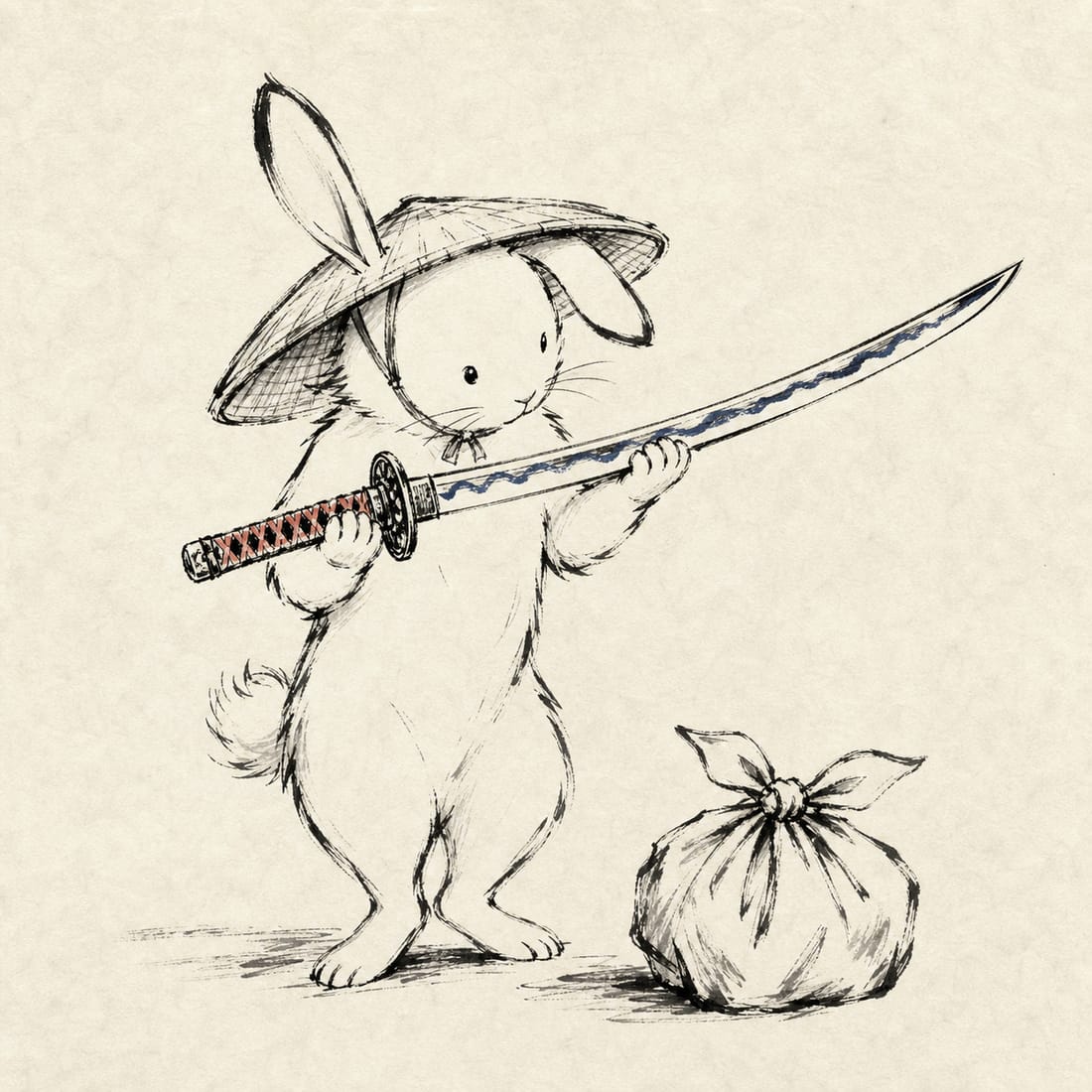
(Editorial note: an illustration of Dōjigiri together with our guide rabbit is planned to go here. A photograph of the actual blade will follow once usage rights are confirmed.)
Where can you see the real thing?
It is held by the Tokyo National Museum. It isn’t necessarily on permanent display, so check the official website for the exhibition schedule. It’s a long way from San’in, but being able to say “a work by our town’s swordsmith is a National Treasure at the Tokyo National Museum” is no small thing.
The connection to Hōki
Who was the swordsmith Yasutsuna, and why was such a famous blade born in Hōki? That comes down to a story of iron sand and rivers. Continue to The Swordsmith Yasutsuna and Hōki’s Tatara Ironmaking.
A word from the rabbit: As someone firmly in the give-the-ogre-a-dumpling camp, I do wish they’d offered him a dumpling once before the slaying.
References:
- Hōki Tatara Navi. “Yasutsuna, From the Very Beginning!”
- Touken World. “The Five Greatest Swords under Heaven: Dōjigiri Yasutsuna”
- Note: The tale of Shuten-dōji is a legend. The hedging phrases (such as “it is said”) mark that distinction.